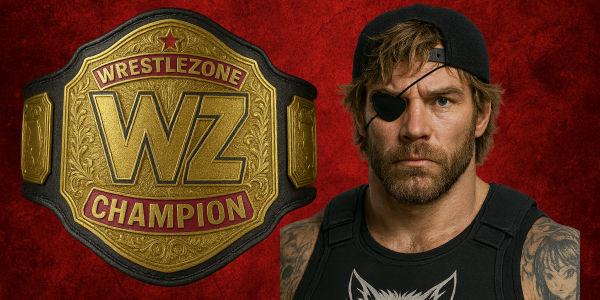
CHRIS ROSS — THE MAN WHO WALKED THROUGH FIRE
Posted on February 18, 2026 by WrestleUTA.com in The Spotlight
There are champions… and then there are survivors.
Chris Ross was never supposed to be either.
He did not arrive in the United Toughness Alliance wrapped in destiny or polished in promise. He came out of Harrisburg — out of concrete, smoke, and nights that don’t end clean — carrying nothing but rage and a willingness to cross lines most men wouldn’t even look at. Wrestling did not refine him. It revealed him.
And what it revealed was dangerous.
Ross’ early years were not marked by admiration, but by chaos. He spoke too loud, fought too hard, and cared too little about the consequences. Authority tried to tame him. Fines tried to silence him. Nothing worked. Not even punishment — not even anger management — could dull the edge of a man who believed the world had already written him off.
Then came the moment that defined his infamy — brutality so raw that even hardened observers recoiled. Ross crossed lines others feared, and in doing so carved his name into the darker corners of the sport. Violence was not a tactic. It was a language. And for a long time, Chris Ross spoke nothing else.
He vanished into exile.
But exile did not soften him.
It sharpened him.
Across other battlegrounds, Ross became something closer to myth than man — chokeouts, shattered bodies, blood on concrete, faces driven into steel and glass. He did not just win matches; he ended nights, careers, and sometimes pieces of people. The industry turned its back, labeling him too dangerous, too unpredictable, too far gone.
And then life struck harder than any opponent ever could.
Loss came like a slow collapse — friends, family, love, purpose — stripped away until nothing remained. By the time 2024 arrived, Chris Ross was not fighting the world anymore. He was fighting emptiness. The kind that swallows men whole. The kind most never escape.
Ross did not escape.
He endured.
And endurance forged something colder.
When Chris Ross returned to the UTA, the chaos was gone — replaced by something far more frightening: control. His rage no longer spilled wildly; it focused. His violence no longer screamed; it whispered. Each movement carried intent. Each strike felt personal. This was not the reckless destroyer of the past.
This was a man with nothing left to lose.
And men with nothing left are the most dangerous of all.
Then came gold.
The UTA Championship did not make Chris Ross. It confirmed him.
He tore it from Jarvis Valentine in a war that reflected everything Ross believes about this sport — brutality over beauty, survival over symbolism. To Ross, a three-count is not victory. Victory is measured in who walks out under their own power… and who leaves broken. That philosophy is not marketing. It is identity.
Inside the ropes, Ross does not wrestle — he drags fights into existence. Suplex after suplex like collisions. Mounted forearms raining like blunt-force truth. The 10-71 elbow spinning like a final warning. The 12 Gauge headbutt cracking skull against skull. And when it ends, it ends violently — Welcome to Harrisburg, a curb stomp that feels less like a move and more like a statement.
He does not tap. He does not quit. He does not break.
Even when broken.
Yet the deeper story of Chris Ross is not brutality — it is contradiction.
Because beneath the ruthless exterior is a man shaped by loss, not just anger. A man who knows what it means to have everything taken — and still stand up anyway. He does not seek approval. He does not ask forgiveness. But he carries something unexpected beneath the scars: resilience.
And that resilience has defined this era of Chris Ross.
The UTA Championship reign has not been calm. It has been war. Conflict with Trey Mack turned personal, volatile, and explosive — ambushes, brawls, chaos spilling from ring to backstage, violence threatening to consume everything around it. Ross did not back down. He never does. Even battered, even outnumbered, even standing on shaking legs — he stands.
Because standing is who he is.
His recent run of dominance — weeks and months recognized with repeated Superstar honors — has not been built on dominance alone, but on presence. Ross does not simply appear in moments; he becomes them. Every promo sounds like truth carved in concrete. Every fight feels like something unfinished.
No allies. No safety net. No illusions.
Just Chris Ross.
And perhaps that is why he resonates.
He is not the clean hero. Not the polished champion. Not the savior.
He is the survivor.
From the streets of Harrisburg to the top of the UTA, Chris Ross has walked through fire, through exile, through grief, through violence, and through himself — emerging not cleansed, but forged.
Not redeemed.
Not forgiven.
But still standing.
And as long as Chris Ross is still standing… the fight is never over.
 No Love Lost – March 7, 2026
 Brand New Day – January 18, 2026
 Seasons Beatings – December 28, 2025
 Black Horizon – December 13, 2025